Unknown's avatar

About adivaani

A platform for adivasi expression based in Kolkata.

Ruby Hembrom in Scroll: Why the pandemic has made little difference to adivaani

Coping, holding up, getting through, surviving, managing, carrying on and their synonyms are the instinctive verbs I’m ambushed with when asked about our publishing venture adivaani’s well-being in the wake of Covid-19. The assumptions and predictions that my tiny outfit has to have been upended by this crisis are reflexive. The pressure to admit that things have gone askew for my enterprise is such that admitting otherwise would be bizarre.

Click here to read the piece

adivaani titles @ International Kolkata Book Fair

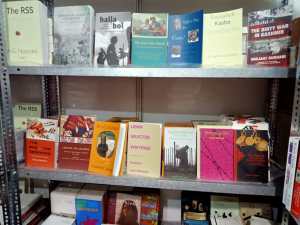
Find adivaani titles at LeftWord Books

Hall no-1, Stall no-15. (Closest entrance gate no: 3)

Central Park Mela Ground, Salt Lake, Karunamoyee crossing, Kolkata

Wed, 29 Jan, 2020 – Sun, 9 Feb, 2020 / 12 – 8 PM

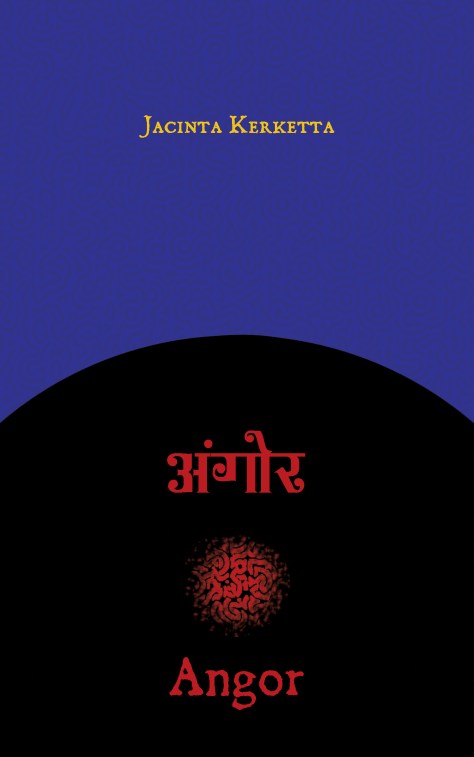
Two out of print titles: We come from the Geese and Angor are back in stock as well.


A six year pilgrimage … a late post!

Pilgrimage is bearing witness—to an intangible presence in places or objects we call sacred. It is an interaction with that which is marked as hallowed. The goal of pilgrimage is to establish a connection, a union with that presence.

With these words I opened a presentation in Nicosia, Cyprus, in December, 2016. They are in many ways a reflection of the pilgrimage I’m on with adivaani, bearing witness to a presence I experience everyday, with every interaction, every creation, with my brethren and collaborators, borne out of a collective memory and history and shared heritage.

A pilgrimage for us is then a celebration of life and all that sustains it; and most of it may not even require arduous travel or movement outside of our immediate surroundings.

Our work at adivaani is manifested from this aura emanating from the love of my people and forms the bedrock of what we do and believe in.

Mid 2017 marked 5 years of our being and despite still being the same small operation when we started off, working from the same space—home, not being able to scale up, we’re in no way discouraged or disheartened; if anything we’re just as resolute when we first began, if not more to keep doing, exploring and blaze the trail.

We thank you for your kindness and continued support thus far and hope the relationship we’ve formed will grow in strength.

Highlights from the time gone by:


  • 5 March 2017–Keynote address and panelist on Marginalised Publishing at Dalit and Tribal Studies and Action Academic Seminar On Social Business Innovators &
the Empowerment of Dalits and Tribes Organised by Centre for Social Justice and Governance, School of Social Work, Tata Institute of Social Sciences, Mumbai.
  • 7–8 March 2017: Conducted Dalit and Tribal Studies and Action Academic Writing Workshop for Scholars Engaging on Adivasi/Tribal Issues Organised by Centre for Social Justice and Governance School of Social Work, Tata Institute of Social Sciences, Mumbai.
  • 16 December: 2017, Keynote Speaker, Tribal Literature Festival, The Indira Gandhi Rashtriya Manav Sangrahalaya (IGRMS), Bhopal.
  • 18 January 2018, Publishing Roundtable hosted by the Australian High Commission to meet Australian Publisher’s Delegation.
  • 23 – 26 February 2018 at the Literaturhaus Zurich, Literaturhaus Zurich – Days of Indian Literature. Readings and discussions with Rahman Abbas, Urvashi Butalia, Ruby Hembrom, Meena Kandasamy, Namita Khare, Pankaj Mishra, Urmila Pawar, Sharad Sharma, Preti Taneja, Christian Weiss, Heinz Werner Wessler.


Real life is often magical for the Lotha tribe of Nagaland, as this collection of folk tales reveals

A review of Nzanmongi Jasmine Patton’s A Girl Swallowed By A Tree written by Hansda Sowvendra Shekhar…

Nzanmongi Jasmine Patton’s book, A Girl Swallowed By A Tree: Lotha Naga Tales Retold, is a collection of thirty folk tales from the Lotha tribe (or indigenous community) of Nagaland. In her introduction to the book, Patton writes: “Nagaland is one place in North East India where orality is still very relevant as well as significant. Like their counterparts among the African and Native Americans, Nagas also made sense of the vast universe around them through storytelling, as a way of keeping their culture and ipseity alive…Nagaland is among the most heterogeneous [states] in the North East, housing more than sixteen tribes…Every tribe has its unique collection of stories, concurring at many points, yet somehow different in complex ways as becomes evident with each retelling.”

Read the rest at Scroll


Behind the Indian Boom, an exhibition in London and its catalogue


Catalogues attract catalogues—who knew? We had just finished Mark Elliot’s exhibition catalogue—Another India: Explorations and Expressions of Indigenous South Asia, when Alpa Shah, who’d been to the exhibition contacted us  to collaborate on another one.  The London School of Economics, Department of Anthropology and the School of Oriental and African Studies, SOAS, at the University of London were planning an exhibition dealing with the exclusion dalits and Adivasis suffer under the neoliberal economic policies applied in India. With the scholars behind the project approaching adivaani our newest title in our imprint One of Us came to life —  Behind the Indian Boom: Inequality and Resistance at the heart of economic growth.

In this volume, our readers can explore the powerful collection of images displayed at the Brunei Gallery of SOAS, that tell the stories of everyday, backbreaking labour that our peoples engage in to survive in this country. These images are testimonies of Adivasis and Dalits living with rights denied, identities, culture and languages undermined.

So please, grab a copy at our usual online platforms and bookstores too or buy it directly from us with at Instamojo.

Here’s a little treat—a preview of the introductory paragraphs of the book:

Much has been made of the boom currently taking place in India. One of the world’s fastest growing economies, it is predicted that by the middle of the century India will be one of the two largest, alongside China, leaving the West behind. But what does this growth look like for the people on whose land and labour it is based?

Although India is now home to more than a hundred billionaires, around 800 million people still survive on less than two dollars a day, and eight Indian states have more poor people than twenty-six of Africa’s poorest countries put together. It could be said that while the wealth of the West is founded on colonising other countries, the extreme wealth of a small minority in India is based on colonising parts of its own country and its people. Since the 1990s, when India liberalised its economy, foreign corporations have also been investing in India, benefiting from and also exploiting its resources and its cheap labour.

BEHIND THE INDIAN BOOM travels across the country to meet some of its Dalits and Adivasis—its low caste and tribal communities—historically stigmatised
as ‘untouchable’ and ‘wild’, in order to understand the roles they play in the Indian and the wider global economy. Despite India’s significant economic growth, these tribal and low caste communities remain at the bottom of its social and economic hierarchies. Though economists have said that some advances have been made in the reduction of absolute levels of poverty, they have also shown that some groups have fared much worse than others and that income and wealth inequality is increasing in India. Adivasis and Dalits are some of the people who have gained the least from growth in India and, as this visual essay shows, millions have lost out because of it. They are a source of cheap labour from which much of the world economy benefits, and some of the lands on which they have traditionally lived for generations are today important crucibles of global industry. Dalits and Adivasis count for more than 200 million and 100 million people respectively; that is a staggering one in twenty-five people in the world. Their situation also reveals insights into the conditions of other oppressed people across the globe.

BEHIND THE INDIAN BOOM draws on material collected by researchers affiliated with the London School of Economics, Department of Anthropology, Programme of Research on Inequality and Poverty. It also includes the work of local journalists and activists. The social anthropologists involved have lived for several years, sometimes decades with the people whose lives they are documenting. The aim is to give a sense of the everyday struggles that Adivasis and Dalits go through
to survive in the contemporary economy, and also their fight back against the situations they find themselves in.

Buy directly from us with Instamojo

Exciting things are happening at adivaani, and as we reach the 5 year mark, we’re happy to share an upgrade to the way we operate. We’ve finally been able to enable a direct online purchase from our website using a safe and tested payment gateway option—Instamojo.


If you are going to purchase online, we’d encourage you to do so directly from us. Our overseas readers can also use this platform to acquire our books.

We’re asking for our buyers to bear the shipping charges and hope you won’t mind that.

Our books are still available at the bookstores that have kept us in circulation all these years as well as the usual online portals. Do keep up with our activities on our website and social media. And should you need to contact us directly, please email, phone or drop in.

Thank you for supporting adivaani all these years and cheer us on as we move into yet another year of cultural documentation and dissemination work.


Another India: an exhibition and a book

The exhibition Another India: Explorations and Expressions of Indigenous South Asia, opened on the 7 March 2017 and will continue until April 2018 at the Museum of Archaeology and Anthropology (MAA), Cambridge University.

Curated by Dr. Mark Elliot, this exhibition “explores the tangled histories of artefacts from indigenous populations in India and how they came to be in the collections in Cambridge.”

The assemblage being exhibited is a combination of artefacts, paintings and photographs from MAA’s collection, many of which have never been exhibited before, and artworks by contemporary artists from the Indigenous and Adivasi communities represented.

We’re happy to announce that the catalogue from the ongoing exhibition—which is a remarkable account of the objects, the people who made them and who collected them and their complex legacies, is now available for sale at adivaani’s regular distribution channels.

Book Release: A girl swallowed by a tree by Nzanmongi Jasmine Patton


___

Please join us in celebrating the release of:

A girl swallowed by a tree

Lotha Naga Stories Retold

by Nzanmongi Jasmine Patton.

___
Saturday, 29th April, 2017
6 PM

___
India International Centre
Seminar Hall 2
40 Max Mueller Marg, New Delhi–110003

The year that’s been

2016 has been the most engaging year for us by far; so much so that we weren’t able to reach out to you regularly. Our sincerest apologies for that!

January opened with the news that I was selected as Asia Foundation Development Fellow 2016—an opportunity that has been such an enriching experience, where I have been able to explore new geographical terrain, test my capabilities and hone my skills.

January also had adivaani travelling to the Jaipur Literature Festival, where I spoke at three sessions (one at the Jaipur Book Mark) engaging new audience with Adivasi literature and those who produce it.

In March adivaani in collaboration with Dr. Mark Elliott, Senior Curator for Anthropology, Museum of Archaeology & Anthropology, University of Cambridge organised a workshop with Adivasi sculptors and artisans in preparation for an exhibition in 2017; where the participating artists could respond to the existing collection from 19th century Adivasi India and contribute with their own artworks.

All along we were working on four books. The first was Jacinta Kerketta’s bi-lingual (Hindi-English) poetry book Angor and its German version Glüt; which were released in May, first in Ranchi and then in Germany. I had the opportunity to speak on Santali Literature at the annual India Literature Forum, Germany before heading on a cross-country tour along with Jacinta, presenting both books at events at universities, bookstores and cultural hubs.

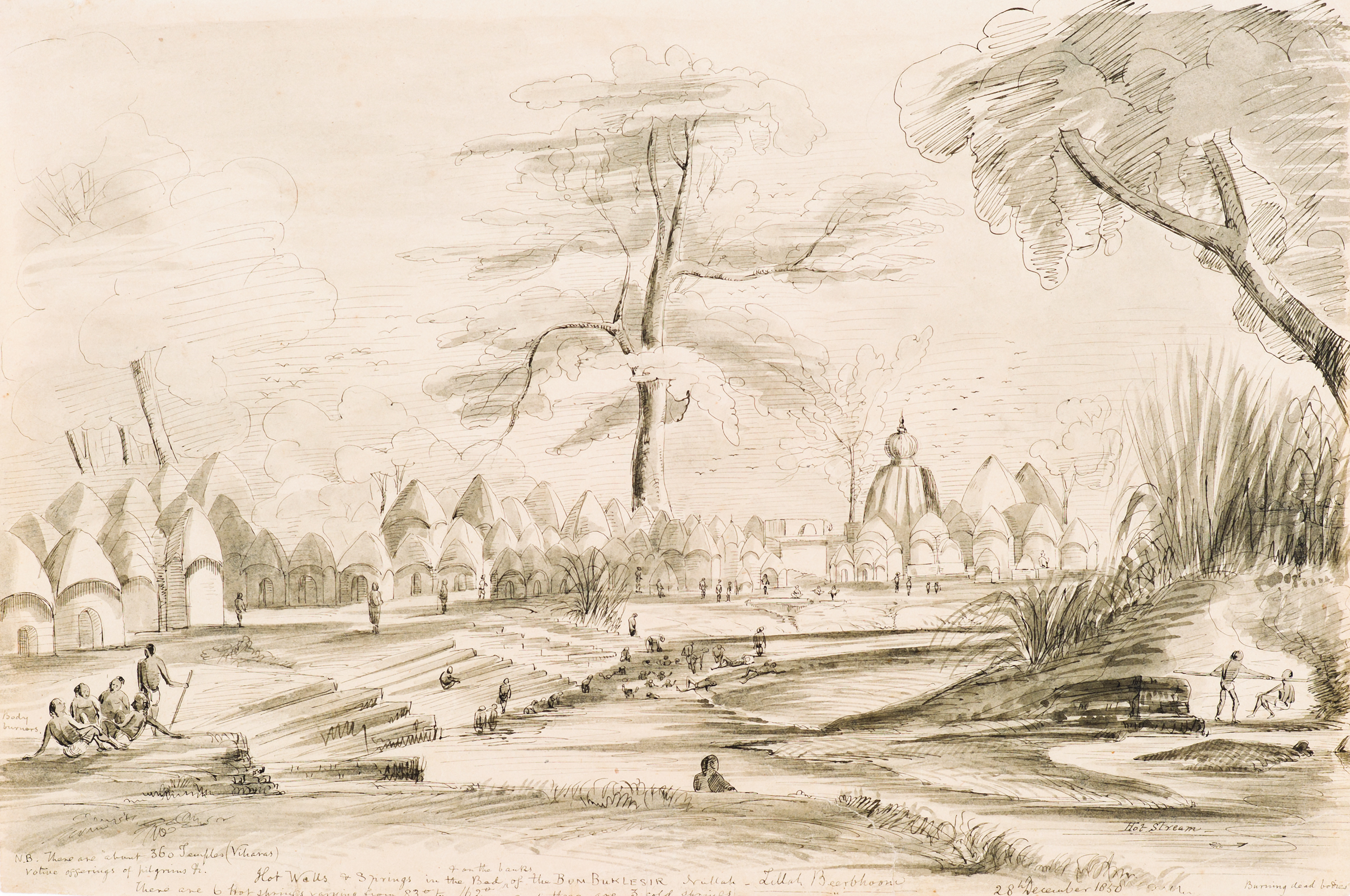
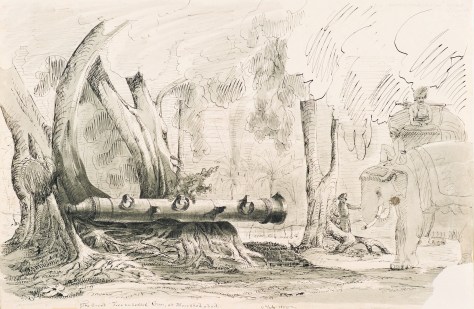
In September, Ngaire Gardner’s book Illustrated Pursuits: W. S. Sherwill in India 1834–1861 was published; a collection of drawings, published articles and maps by Walter Stanhope Sherwill, who spent a total twenty-seven years in India as Revenue Surveyor.

Gardner is the great-great-granddaughter of Sherwill and when she proposed the book to us, we knew little of Sherwill except that the iconic drawing of Sidhu Murmu in jail, one of the brothers famous for leading the Santal Rebellion 1855–57, was in all probability drawn by him. That and his other works showcased my people and their locales from a hundred and fifty years ago and that was incentive enough to produce that book.

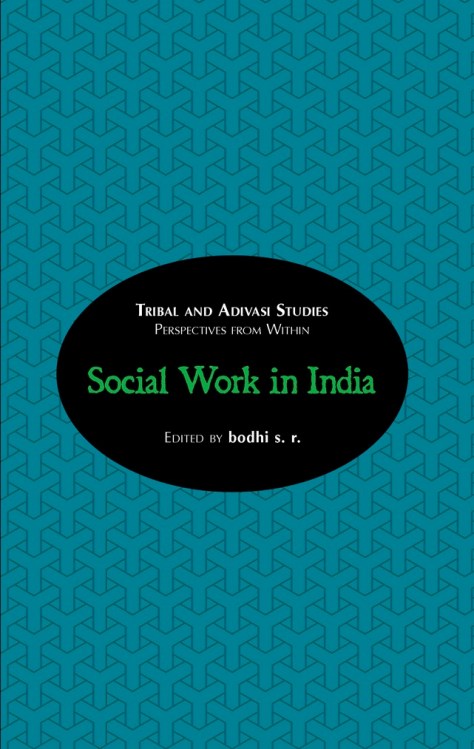
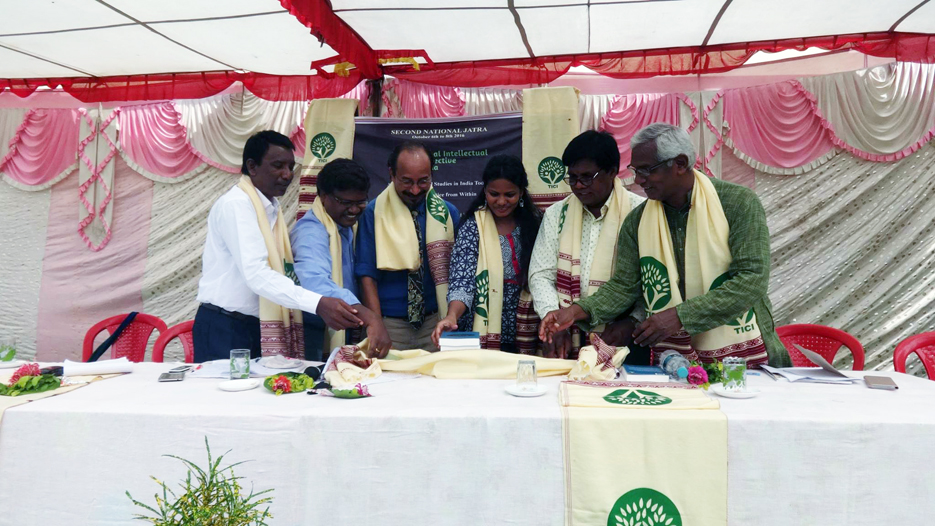
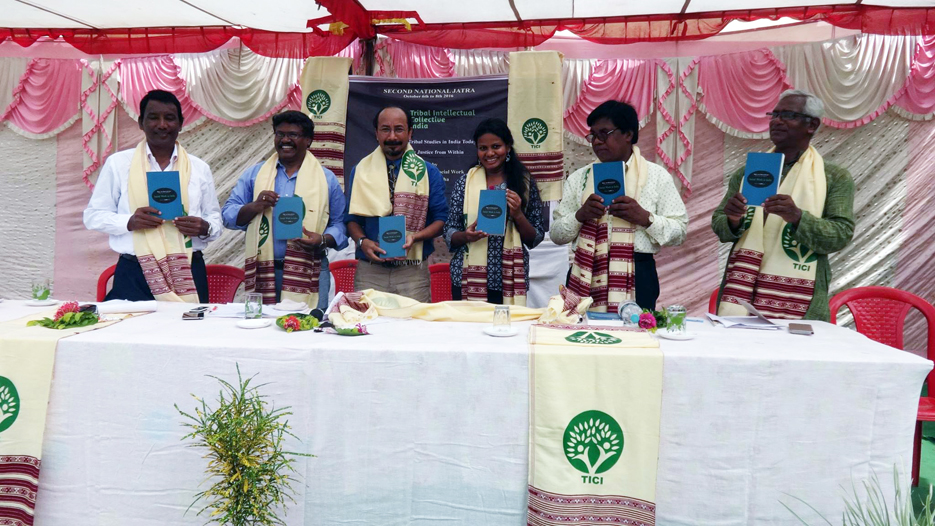
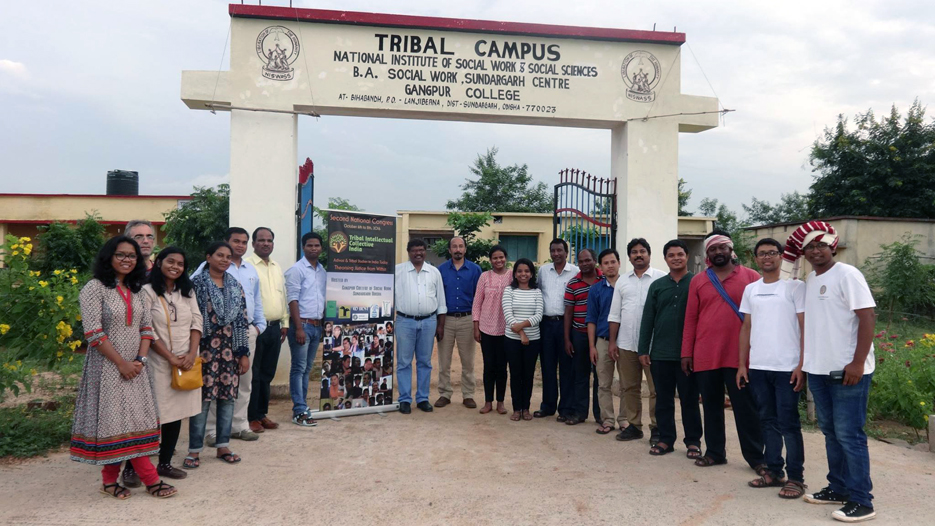
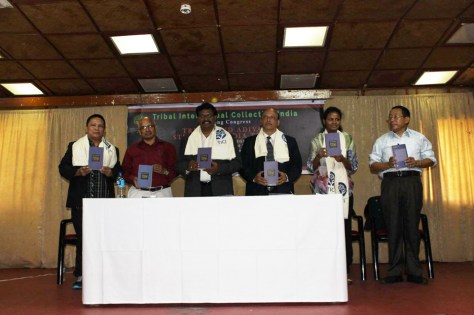
Then the first week of October had us gather at Gangpur College of Social Work-Sundargarh, Odisha for the Second National Congress (Jatra) organised by the Tribal Intellectual Collective India and several co-hosts (including adivaani). We launched volume 3 of the Tribal and Adivasi Studies Series—Social Work in India, edited by bodhi s. r.

This year adivaani also got its 12AA (tax exemptions certificate) and 80G (50% tax exemption for donors from India) consolidating it’s legal status as a non-profit.

As the year comes to a close, we are only grateful for the year that’s been. We appreciate everyone who has stood by us, sustained us and celebrated every milestone big and small with us.

As we step into the New Year, we look forward to another eventful year and we hope you’d share this journey with us. More books and more projects are in the pipeline for 2017.

We have had a year long running online fundraising campaign that flows into next year as well. Do mark your support on Generosity or contact us for a domestic donation.

We thank you for your solidarity, always.


Best wishes,

ruby-signature-final

Legal Status

adivaani was registered as a Trust with the Additional Registrar of Assurances in Kolkata, West Bengal on July 19, 2012. Our Registration number is 4326.
adivaani is registered u/s 12AA (1)(b)(i) of the Income Tax Act 1961, and has the following tax exemptions:~ Approval under section 80G (5)(iv) of the Income Tax Act,1961 (50% exemption).