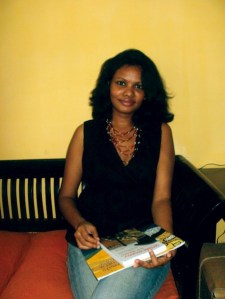
A new interview with our Executive Director. Find it in The Telegraph:
a. In the website of the newspaper:
My life. My telling, In my voice
b. Or get the pdf of it as it was published:

A new interview with our Executive Director. Find it in The Telegraph:
a. In the website of the newspaper:
My life. My telling, In my voice
b. Or get the pdf of it as it was published:

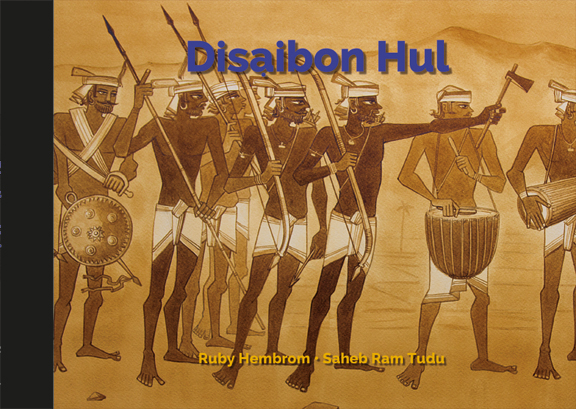
Our children’s book on the Santal Rebellion of 1855-57 Disaibon Hul wins the Printed Children’s Book of the Year at the Publishing Next Industry Awards 2015. To everyone who helped make the book and everyone who has read it, our heartfelt gratitude. Congratulations Saheb Ram Tudu and many thanks to CDC Printers for bringing alive the vision of the book on paper and Sarini and the Tribal Cultural Heritage in India Foundation for support in realizing the project. Here’s the link to the jury for the awards.
Femina’s July 24–August 6, 2014 issue carries Ruby’s profile. Click on the image to read it.
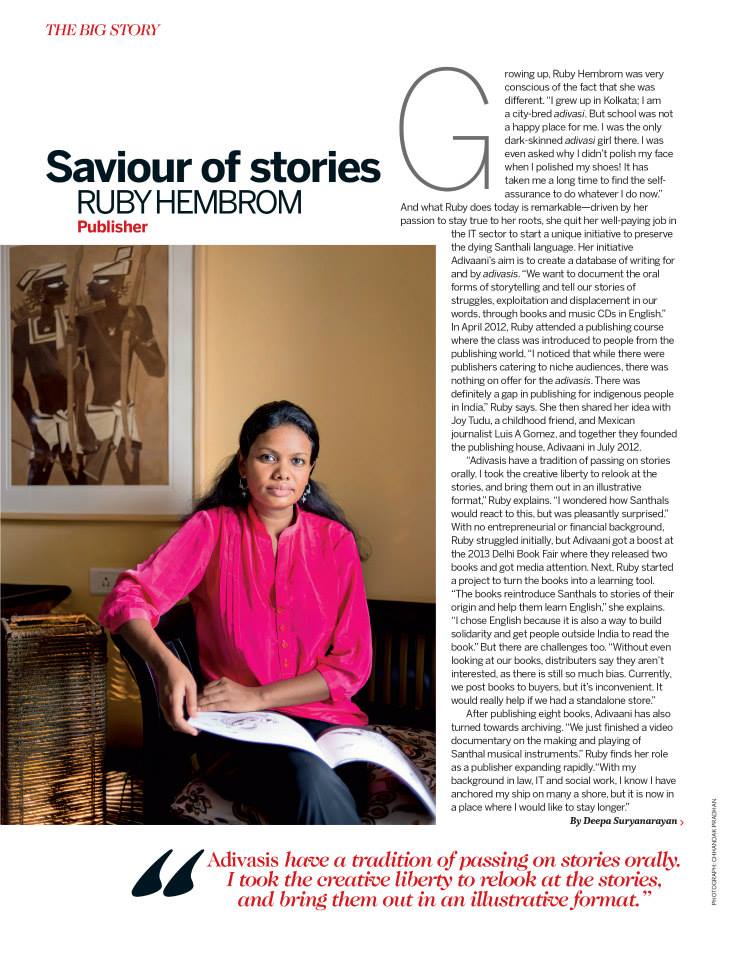

Anyone collaborating with Ruby Hembrom is sure to widen his or her mental bandwidth. For she not just thinks out-of-box but also invests her soul and spirit into the work she undertakes.
Kolkata-based Hembrom runs Adivaani, a publishing house for adivasi (tribal) literature. It was launched by a group of amateurs that included her friend Joy Tudu, Luis A Gomez, a Mexican journalist, and Boski Jain, a graphic artist.
The city is at the heart of a quiet but slow revolution, with publishers, small and big, taking tentative steps in the field of tribal literature. One such group is Adivaani, a database which collects, publishes and preserves tribal folklore and culture.
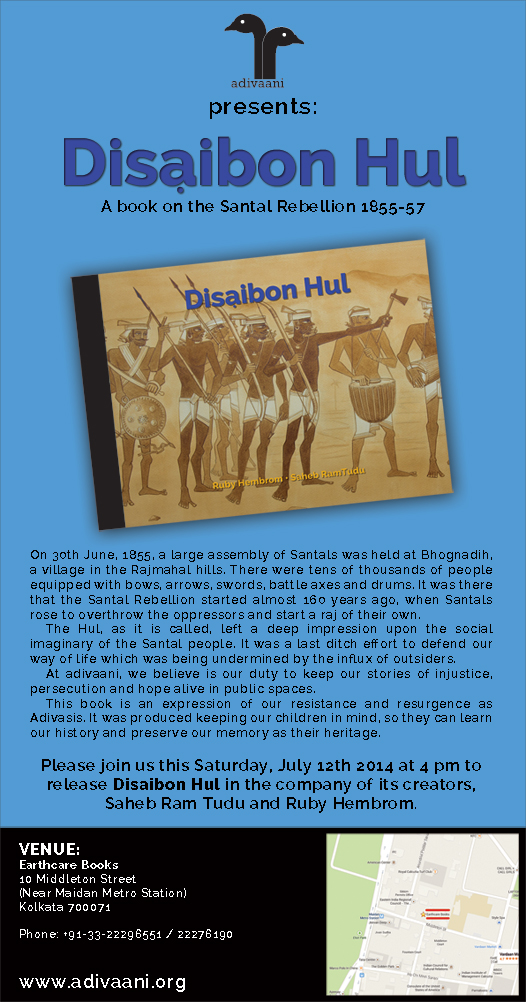
On 30th June, 1855, a large assembly of Santals was held at Bhognadih, a village in the Rajmahal hills. There were tens of thousands of people equipped with bows, arrows, swords, battle axes and drums. It was there that the Santal Rebellion started almost 160 years ago, when Santals rose to overthrow the oppressors and start a raj of their own.
The Hul, as it is called, left a deep impression upon the social imaginary of the Santal people. It was a last ditch effort to defend our way of life which was being undermined by the influx of outsiders.
At adivaani, we believe is our duty to keep our stories of injustice, persecution and hope alive in public spaces.
This book is an expression of our resistance and resurgence as Adivasis. It was produced keeping our children in mind, so they can learn our history and preserve our memory as their heritage.
Please join us this Saturday, July 12th 2014 at 4 pm to release Disaibon Hul in the company of its creators, Saheb Ram Tudu and Ruby Hembrom.Phone: +91-33-22296551 / 22276190
Email: earthcarebooks@gmail.com
Website: http://www.earthcarebooks.com
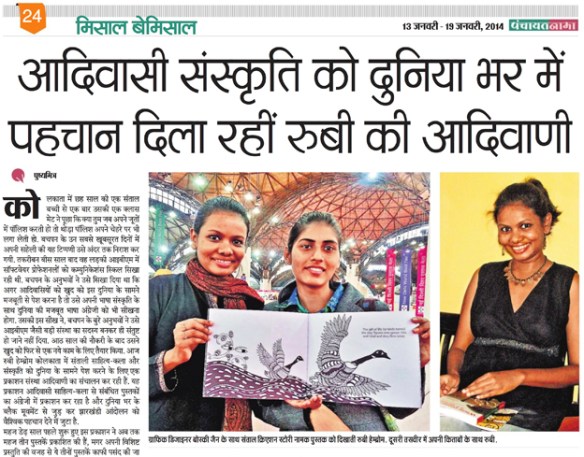
This is a story of three friends in Kolkata coming together and saving a culture and its heritage from extinction. Ruby Hembrom quit her job as an IT professional to take to promoting the folktales of Adivasis a place on the bookshelves. Here is the inspiring and heartening tale.
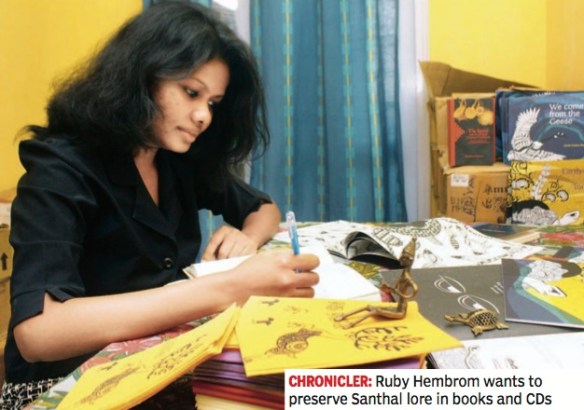
The passion to give something back to her community drives this young tribal woman to venture into an unknown terrain. Ruby Hembrom gave up a well paid job in the IT sector in Delhi five years ago and returned to Kolkata to preserve the dying Santhal language.

Ruby Hembrom had already worked for big names like IBM when she quit the IT-BPO sector. She had eight years in Training, Learning and Development, and she went straight to the villages of Jharkhand. But now, she is known for her publishing concern for tribal literature, Adivaani, which she has put up with her friends, Joy, Boski and Luis. Ruby speaks on Adivaani, life and more.
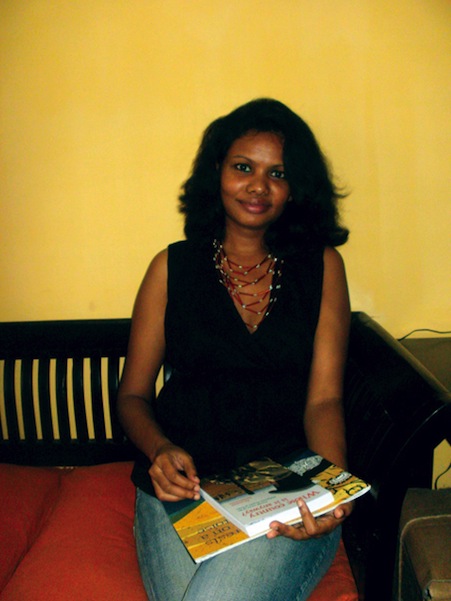
On August 8 this year, the eve of International Day of the World’s Indigenous Peoples, Ruby Hembrom decided to institute Adivasi Pickle, a “prize for indigenous ideology, thought and knowledge”. In the announcement, she called on Adivasis to share unpublished stories of their lives, struggles and triumphs. From the submissions, a jury will select “the most relevant entry”. This will be published in August, 2014, by Adivaani, a publishing house “by and for” Adivasis, started last year by Ruby.
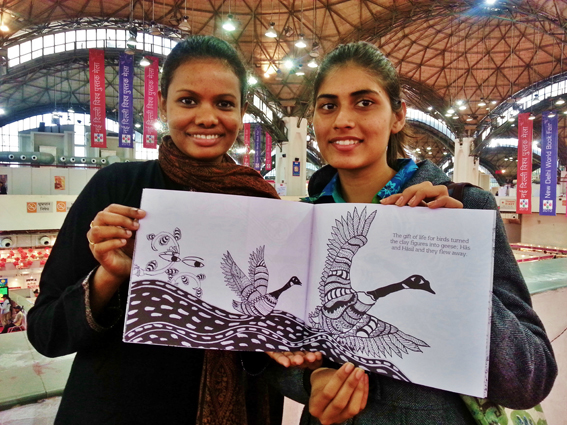
Ruby Hembrom left her well-paid job at a multi-national company, and now spends most of her time working on projects to take tribal folklore to the masses. She has set up her own publication firm, Adivaani, to promote the history of Adivasi struggles.
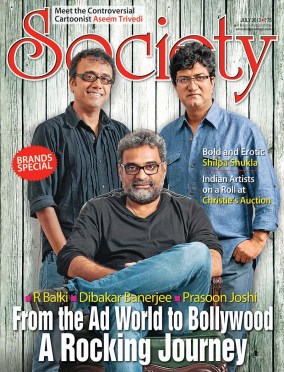
Kakoli Poddar, journalist with Magna Publishing, chose to feature adivaani in this month’s issue of Society:
Ruby says they want to create a database of adivasi writing of, for and by the adivasis. “We wish to document the oral forms of their storytelling and folklore. We also aim to narrate our stories of struggles, exploitation and displacement, in our words.”
Go get a copy. Find us on page 98.
KOLKATA: When Ruby Hembrom quit her cushy job in the IT sector a couple of years ago, she didn’t think twice, thanks to the greater calling to unite with her roots. The result: the soft-spoken yet aggressive Santhali woman is all set to publish her second book that is part of a series on untold lore of the Santhals.
To create Adivaani, a publishing house launched by a group of three amateurs to lend a voice to the nation’s indigenous population, months of human planning and perseverance were required.
Although we aren’t really the first or only adivasi publishing house in the country, we are thrilled to receive this kind attention from the media. Thank you, Saju Madhavankutty, from The Times of India – Chennai, for this feature:
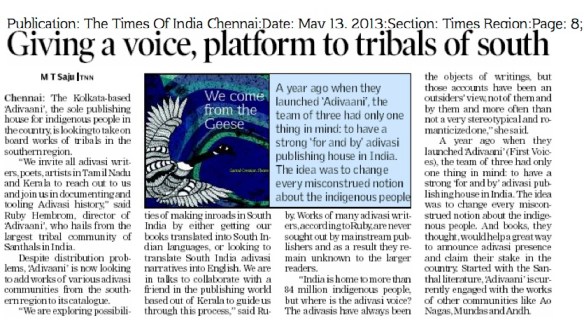

Why don’t we have an Adivasi voice?”, “Why don’t we have a ‘for and by’ Adivasi publishing house?”, “Where is the authentic Adivasi narrative?”


Having launched an ambitious venture, adivaani is grappling with the realities of the industry’s stereotypes and the challenges it poses for the start-up publisher, the chief of which is Distribution.
Read the rest at Booksy.in

by Ajachi Chakrabarty
Time machine. That’s how Hembrom looks at her nascent attempt at creating a publishing house for India’s indigenous population: a time machine that documents Adivasi history and culture, fundamentally an oral tradition, before they are forgotten in the wake of modernity.
Read the rest in this week’s Tehelka and in their website as well…
Writer Amitav Ghosh had posted a tweet on Gladson Dungdung’s new book.

In 1980, one-year-old Gladson Dungdung and his family were displaced from their agricultural land for the construction of Kelaghat dam in Jharkhand and pushed into the forests of Simdega, where Dungdung’s father was arrested on allegations of felling trees. Ten years later, Dungdung’s parents, during another land struggle, were murdered.
In his book, ‘Whose country is it anyway?’ Dungdung writes, “The Kelaghat dam was constructed with the aim of irrigating land in Simdega block. Three villages, Bernibera, Bara Barpani, and Budhratoli, were submerged and it affected 3,500 people. Currently, the water reaches only one village — Meromdega.”
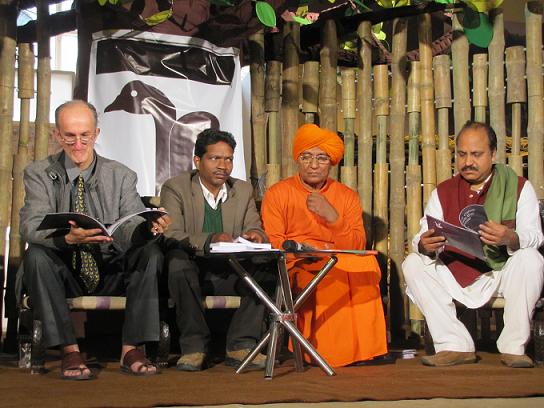
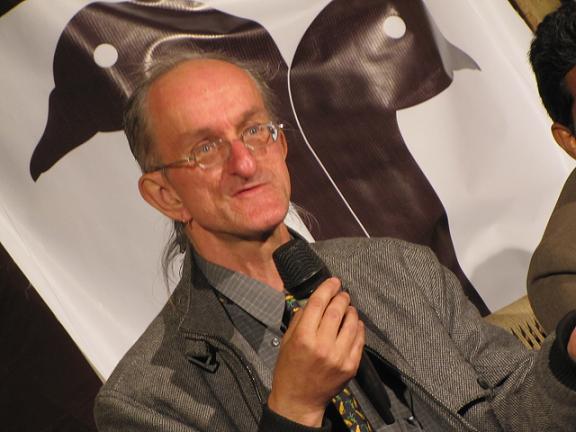
The book published by Adivaani and launched on Thursday at the Delhi World Book Fair by Himanshu Kumar, Swami Agnivesh and Felix Padel, is Gladson Dungdung’s attempt to tell the story of his people and their struggle.

Ministers who need to raise issues of tribals in Parliament “become slaves” of senior ministers and forget about the “rights of Adivasis”, Swami Agnivesh on Thursday claimed.
“All those who are elected as ministers to represent tribals in the Parliament to fight for their rights and atrocities committed upon them, themselves become slaves of big ministers and forget about the rights of Adivasis,” he said after releasing a book titled ‘Whose Country is it Anyway?’ written by Gladson Dungdung, a human rights activist of Jharkhand, at the World Book Fair here.
The book’s documentation of the many forms of violence and prejudice ranged against Adivasis fills a vital gap in literature. The detail is often sickening and will make any sane person extremely angry. It is shown how Adivasis are being displaced by dams, by industrial/mining projects, by continuing tricks of non-Adivasis
Debate on adivasis, politics and Gladson’s new book

 adivaani