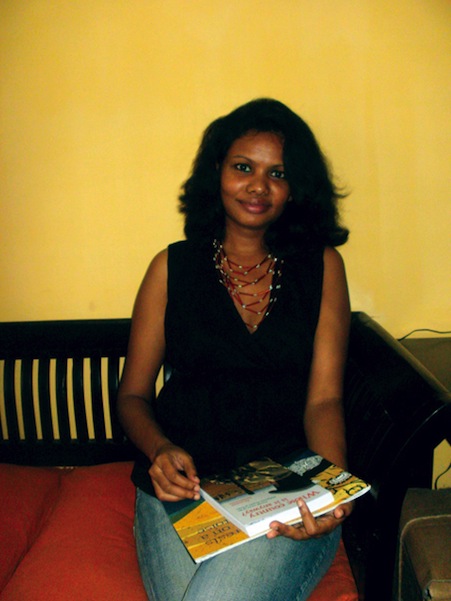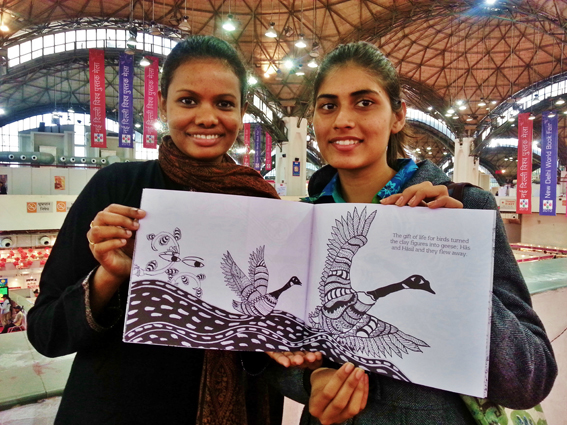
Ruby Hembrom at the Jaipur Literature Festival 2016

JaipurLit

Join Ruby, adivaani’s Executive Director, at the following sessions:

1. Jaipur BookMark, Thursday, January 21, 2016
Time: 12:30 pm to 1:30 pm
Session No.: 2 (Main Stage)
Session Name: An Indian Reader
Speakers: Nirmal Kanti Bhattacharjee, Rita Kothari, Jerry Pinto, Shailesh Bharatwasi and Ruby Hembrom in conversation with Manisha Chaudhry

2. Jaipur Literature Festival, Saturday, January 23, 2016
Time: 3:45 pm to 4:45 pm
Session No.: 98 (Baithak)
Session Name: Adivaani: The Indigenous Literature of India
Speakers: Hari Ram Meena, Ruby Hembrom and Peter Anderson in conversation with Mohini Gupta

3. Jaipur Literature Festival, Saturday, January 23, 2016
Time: 5:15 pm to 6:15 pm
Session No.: 103 (Mughal Tent)
Session Name: A Room of One’s Own
Speakers: Ila Arab Mehta, Anuradha Roy, Ira Pande, Alka Saraogi, Ruby Hembrom in conversation with Anjum Hasan, introduced by Namita Gokhale.

adivaani books at the New Delhi World Book Fair 2016

logo


Where: Sanskriti Book Distributors, Hall No. 6, Stall No. 87, near Gate no. 2, Pragati Maidan.

Venue: Pragati Maidan, Mathura Road, New Delhi, 110002.

Dates: January 9th to January 17th, 2016.

Time: Everyday 11 a.m. to 8 p.m

adivaani’s new imprint One of Us brings out Sylvan Tales: Stories from the Munda country

OU01

In the past we’ve received manuscripts and proposals from Non-Adivasi authors, activists, scholars and researchers who wished to publish with us and we turned them down as a policy as we were creating a niche space for ourselves and they’d anyway have better chances to be published by established, mainstream publishers.

Three years on we realized that there were some Non-Adivasi’s who’ve been so closely associated with us and our issues; who’ve build trusting relationships with us that their voices were important to include to create the larger documentation, adivaani database. After much deliberation we decide to start One of Us to include such narratives.

One of Us is a celebration of outsider-insider collaborations, associations and relationships. adivaani wouldn’t be what it is without such collaborations and neither would our Adivasi movements and struggles.

Samar Bosu Mullick’s Sylvan Tales: Stories from the Munda country is the first title under One of Us; traversing through Munda terrain picking up sights, sounds, smells and flavours from it.

CoverFinal

Sylvan Book Release

Samar Bosu Mullick (centre) at the official release of Sylvan Tales: Stories from the Munda country in Ranchi on the 24th of October, 2015.

Samar (Sanjay) Bosu Mullick has been engaged in the Adivasi struggle for identity, autonomy and rights to resources since 1968. This collection of 14 stories is embedded on facts that he as an activist encountered during the last 45 years of his being among the characters of the stories.

Do pick up the book and read on to savour the stories.

In Telugu now: Our Santal Creation stories

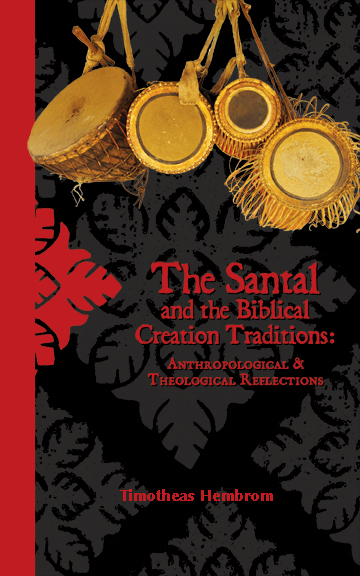
A few months ago Manchi Pustakam, Secunderabad acquired the Telugu rights to our illustrated books on the Santal creation stories.

We are pleased to share that the books are out and can be bought at Kinige. Click on the images to have a look:


Sosobonga, the creation story of the Mundas, is now out

CoverFinalk

In another installment on the works by Dr. Ram Dayal Munda, we are happy to present a bi-lingual volume (English and Roman Mundari) co-authored by Ratan Singh Manki.

Sosobonga, the prayer of the Soso tree, is the ultimate expression of love and respect for our Mother Earth within the Munda and the Asur peoples.

Orally narrated the epic aims not only to present how human life came into existence but also introduces us to a story in search of equilibrium and the restoring actions of reciprocity among humans—between themselves and other beings.

We hope that our readers will have a deeper understanding of Adivasi cultures and through the simple and poetic passages of the book, love this ancient, yet always fresh ritual of fertility, sharing and living within the boundaries of nature.

But, hush, the priest is about to start telling the story. He is passing his right hand over the rice in the winnowing fan resting on his lap… grab your copy and follow his voice.

Get our books on Amazon.in, ilandlo and Walking Bookfairs


amazon-india-logo


ilandlo+logo+2


Walking BookFairs

HIG 34 Phase 1. HB Colony. Khandagiri. Bhubaneshwar-751030


More options now for our dear readers to purchase our books online.

Happy book shopping!

adivaani is now on flipkart

flipkart_logo

We are happy to share that adivaani now has another platform where our books can be purchased.

Happy Reading!

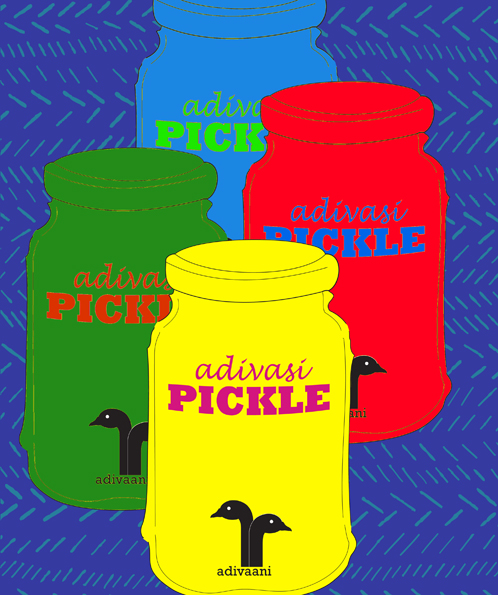
Release of Becoming me, our first Adivasi PICKLE book

The first edition of Adivasi PICKLE has formally and successfully come to an end.

Becoming Me by Rejina Marandi was released on Saturday, the 25th of October, 2014 at the author’s hometown in Assam.

The event was a celebration of stories, storytelling and storytellers soaked in Adivasi flavours.

The Forest Guest House Campus, Srirampur, Santal Colony, Kokrajhar District was the venue and the open air setting amidst trees made for an event befitting Adivasis’ love for nature. Sadri and Santali music played through the sound systems setting the stage for festivity.

Guests—family, friends, dignitaries, activists, journalists, well-wishers arrived from all corners of Assam, some even taking a train journey to share in Rejina’s grand day. Welcomed in traditional ways by washing of feet and being gifted a panchi; we felt at home.

Rejina looked lovely in her traditional Santali clothes. It was such a proud moment to unwrap her books from the panchi that held them together and unveil it to everyone present.

She says Becoming Me is her part of the effort to transform oral tradition to the written form. “Today’s Present is tomorrow’s History. So, let each one of us start sharing our part of the story in the written form”, she said.

adivaani thanks ASSU (All Santal Student’s Union), ASSAA (All Adivasi Students’ Association of Assam), Wilson Hansda and Rejina Marandi for putting this book release event together so beautifully and everyone who addressed the gathering and attended it.

Congratulations once again to Rejina Marandi! May our stories travel far and wide.


Click on any of the photographs to view the entire gallery.


Felix Padel reviews Dancing on our turtle’s back

This book is a timely affirmation of Indigenous together with environmental issues. Dancing on our turtle’s back refers to the continent of America, and implicitly Mother Earth, as the turtle we dance on.

Cover

Because we belong to the land—a special introductory section for the Indian edition makes clear what Indigenous peoples worldwide have in common, alongside an infinite array of differences—for one, an environmental consciousness in the face of ‘State-facilitated environmental devastation’; for another, a history of Resistance and Resurgence, ‘reclaiming and reoccupying our homelands’. In Canada, the indigenous movement known as ‘Idle No More’ has created potent political waves recently, reversing past takeovers. In India we still witnesses the opposite—thousands of Indigenous communities attempting, often against massive odds, just to hold onto their lands against a mass wave of corporate invasions.

Read the complete review here

Felix PadelFelix Padel at the release of our first two books at the World Delhi Book Fair, February 2013

Felix Padel is an Anthropologist and the author of The Sacrifice of Human Being: British Rule & the Konds of Orissa (1995, 2000), Sacrificing People: Invasions of a Tribal Landscape (1995, 2010), Out of This Earth: East India Adivasis and the Aluminium Cartel (2010 with Samarendra Das) and Ecology, Economy: Quest for a Socially Informed Connection (2013 with Ajay Dandekar & Jeemol Unni ) and several articles emphasizing the wider significance of Indigenous issues.

Banam Raja, exploring our musical roots

adivaani has taken its archiving work to include documentary films now. Banam Raja is our first production exploring Adivasi musical traditions.
At the end of the day, Santals return to music to become whole again. They bring out their instruments into the courtyard and music, lyrics and song turn into stars in the night sky. Our musical traditions are millennial.
The banam is a stringed instrument. Banams are the lutes and the fiddles of the Santal people. They are made from locally available material–wood, vegetables and animal hide. The most common banams still made and played by Santals are the Dhodro Banam, the Reta Banam and the Phentor Banam.
This video is a tribute to our artists, who have kept our culture alive through generations.


During the process of filming we were able to record some songs by Santal musicians. Here’s a sample of their joy and pride in music—unrehearsed and performed in natural surroundings.